Startup Ideas for 2026 in the Middle East
The Middle East is entering a transformative era. By 2026, the region’s startup ecosystem will be reshaped by government-backed innovation programs, sovereign infrastructure investments, and a surge in AI adoption. With technology spending projected to reach nearly $175 billion in the region, entrepreneurs have a unique chance to ride the wave of digital transformation and sustainability.
Key Regional Drivers
Government Vision Programs: Initiatives like Saudi Arabia’s Vision 2030 and the UAE’s National Innovation Strategy are fueling startup growth.
AI Integration: AI is moving from pilot projects to core business platforms in finance, energy, and government services.
Cybersecurity & Sovereign Infrastructure: With rising digital adoption, startups offering secure, locally hosted solutions are in demand.
Youthful Demographics: A large, tech-savvy population is driving demand for digital-first services.
Regional Investment Funds: Sovereign wealth funds and accelerators are actively investing in early-stage ventures.
Top Startup Ideas for the Middle East in 2026
1. AI-Powered Arabic Language Solutions
AI-driven platforms for translation, customer service, and content creation in Arabic are highly sought after. Localized tools can bridge the gap between global tech and regional needs.
2. Smart Energy & Sustainability Tech
Startups focusing on solar energy optimization, water desalination efficiency, and carbon reduction tools align with Gulf states’ push toward renewable energy.
3. Cybersecurity for SMEs
Affordable, plug-and-play cybersecurity platforms tailored to small and mid-sized businesses are critical as digital adoption accelerates.
4. HealthTech & Telemedicine
With healthcare systems modernizing, startups offering remote diagnostics, AI-driven health monitoring, and personalized wellness apps are gaining traction.
5. AgriTech for Desert Farming
Innovations in vertical farming, hydroponics, and AI crop monitoring can help address food security challenges across the region.
6. FinTech & Islamic Finance Platforms
Digital banking solutions that incorporate Sharia-compliant financial products are expanding rapidly, especially in markets like Saudi Arabia and Malaysia.
7. EdTech for Youth & Workforce Upskilling
Platforms offering AI-driven learning, coding bootcamps, and vocational training are vital for preparing the region’s young workforce for future jobs.
8. Tourism & Cultural Tech
Startups that enhance smart tourism, heritage preservation through AR/VR, and personalized travel planning can tap into the region’s booming tourism sector.
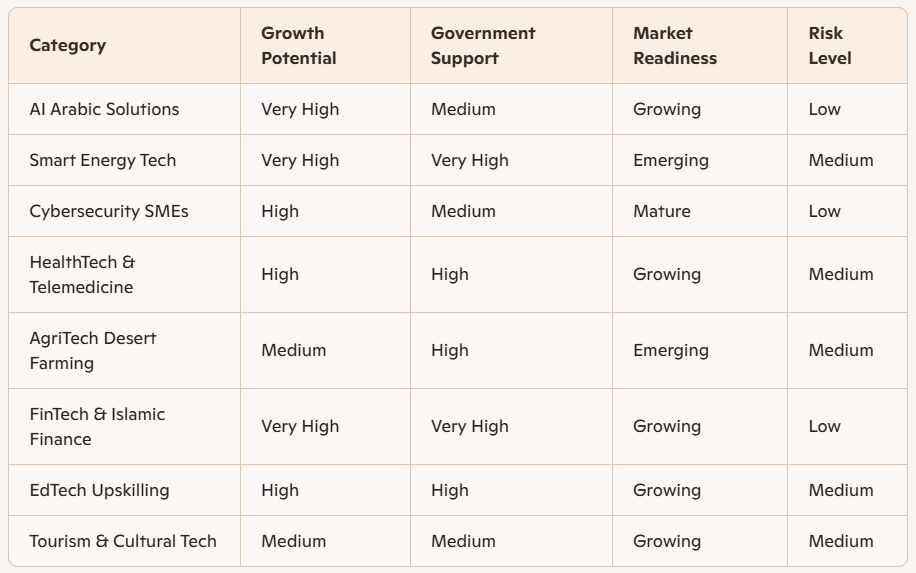
Comparison of Startup Categories in the Middle East
Challenges Specific to the Region
Regulatory complexity: Navigating different legal frameworks across GCC, Levant, and North Africa.
Talent retention: Competition for skilled tech talent is fierce.
Infrastructure gaps: While Gulf states are advanced, other parts of MENA face connectivity challenges.
Cultural adaptation: Startups must balance innovation with cultural and religious sensitivities.
The Middle East in 2026 is not just adopting technology, it’s embedding it into the fabric of society. From AI-driven Arabic solutions to sustainable energy startups, the region offers fertile ground for entrepreneurs who can combine local relevance with global scalability.
For founders, the winning formula will be: solve regional challenges, align with government visions, and build trust with culturally attuned solutions.