The Founder’s Dilemma: Balancing Vision and Execution in 2026
In 2026, the startup landscape is more dynamic and demanding than ever. Founders are expected to be visionaries, operators, storytellers, and strategists all at once. Especially in the beauty, wellness, and lifestyle sectors, where emotional resonance meets logistical complexity, the pressure to “do it all” is real.
But here’s the paradox: the very traits that spark a startup, creativity, intuition, boldness, can clash with the systems and discipline required to scale it. Many founders find themselves caught between two forces: the desire to innovate and the need to execute. One fuels momentum, the other sustains it. Neglect either, and the business falters.
This article explores how modern founders are navigating that tension. It’s not about choosing between vision and execution; it’s about integrating them. From mindset shifts to operational rituals, we’ll unpack the strategies that help founders stay inspired without losing control.
1. The Rise of the “Operational Creative”
Gone are the days when founders could afford to be purely creative or purely analytical. The most successful leaders now embody both. They ideate with flair but execute with precision. This hybrid mindset, what we call the “Operational Creative”, is especially vital in sectors like beauty and wellness, where storytelling and logistics go hand in hand.
Key Behaviors:
Building modular workflows that allow for creative iteration without derailing timelines
Using project management tools not just for task tracking, but for creative alignment
Creating brand rituals (e.g., weekly mood board reviews, monthly strategy syncs) to keep teams inspired and focused
Founder Insight: “I realized I couldn’t just be the ‘ideas person.’ Once I started treating operations as a creative act, designing systems that reflect our brand values, everything clicked.”
2. Mental Agility as a Business Asset
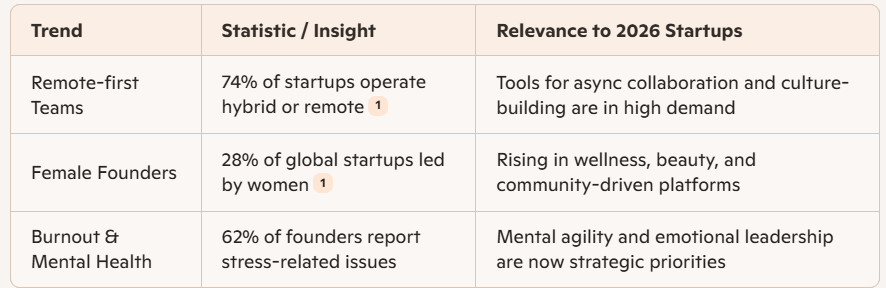
In 2026, emotional intelligence isn’t just a soft skill; it’s a competitive advantage. Founders who cultivate mental agility can pivot faster, lead more empathetically, and build cultures that attract top talent. This is especially true in lifestyle sectors, where brand tone and internal culture are deeply intertwined.
Strategies for Mental Agility:
Practicing “cognitive reframing” during setbacks (e.g., turning delays into opportunities for refinement)
Using founder journaling to track emotional patterns and decision clarity
Hosting internal “pulse checks” to gauge team morale and prevent burnout
Example: A wellness startup founder introduced weekly “energy audits” where team members rated their mental bandwidth. This simple ritual reduced burnout and improved project velocity.
3. Delegation Without Dilution
As startups scale, founders must delegate, but without losing the brand’s essence. The challenge is to empower others while maintaining coherence across messaging, visuals, and customer experience.
Tools for Brand Integrity:
A dynamic brand bible: not just logos and colors, but tone-of-voice, customer archetypes, and storytelling pillars
Role-specific onboarding kits: tailored guides for marketers, designers, and customer service reps
Quarterly brand audits: reviewing external touchpoints to ensure alignment
Founder Quote: “I used to rewrite every email myself. Now, I train my team to write like me, because they understand the ‘why’ behind our tone.”
4. Data-Driven Intuition
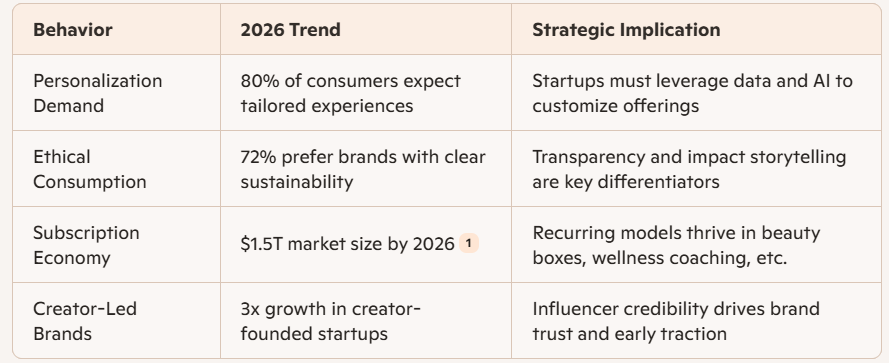
Intuition remains a founder’s superpower, but in 2026, it’s sharpened by data. The most effective leaders use analytics not to replace gut instinct, but to validate and refine it. This is especially powerful in sectors with fast-moving trends and emotional purchasing behavior.
Smart Data Practices:
A/B testing brand messaging across platforms (e.g., “empowerment” vs. “transformation” tones)
Tracking customer sentiment through surveys, reviews, and social listening
Building dashboards that blend performance metrics with qualitative insights
Case Study: A beauty brand noticed that customers responded more emotionally to “ritual” language than “routine.” By shifting copy across their site and packaging, they saw a 22% lift in conversion.
Leading with Integration
The most successful founders in 2026 aren’t choosing between artistry and efficiency; they’re designing businesses that honor both. They build systems that support creativity, and they lead teams with emotional clarity and operational rigor. In the beauty, wellness, and lifestyle sectors, this integrated approach isn’t just smart, it’s essential.
So if you’re a founder feeling stretched between dreaming and doing, know this: you’re not alone. The tension is real, but it’s also a sign you’re growing. The challenge isn’t to eliminate the dilemma, it’s to master it.
Let your vision guide you. Let your systems carry you. And let your brand reflect the harmony between the two.