The Power of Leadership in Startups: Strategies, Styles & Real-World Impact
In the fast-paced, high-stakes world of startups, leadership transcends job titles and hierarchical roles; it becomes the strategic nucleus around which every decision, behavior, and brand expression revolves. Unlike established corporations with rigid systems and buffers, startups operate in a volatile environment where clarity, agility, and conviction are essential. Here, leadership is not just about managing tasks; it’s about galvanizing a team around a shared vision, cultivating a culture of innovation, and making bold decisions with limited data and resources.
This is especially true in emotionally driven sectors like beauty, wellness, and lifestyle, where consumers connect with brands not just through products, but through values, aesthetics, and storytelling. In these industries, leadership must embody the brand’s ethos, translating abstract ideas like empowerment, sustainability, or self-care into tangible experiences for both internal teams and external audiences. A founder’s ability to lead with authenticity and emotional intelligence directly impacts team morale, creative output, and ultimately, market traction. When leadership is strong, teams feel inspired, aligned, and empowered to take initiative. When it falters, even the most promising ideas can unravel under the weight of miscommunication, burnout, or strategic drift.
“Startups don’t fail because of lack of product—they fail because of lack of leadership.”
Why Leadership Is a Startup’s Lifeline
Startups face a distinct set of challenges that set them apart from more established businesses. They often begin with limited financial resources, lean teams, and minimal brand recognition. Every decision, whether it’s hiring, product development, or marketing, must be made with precision, because there’s little room for error. At the same time, the market landscape is constantly shifting. Consumer preferences evolve rapidly, competitors emerge unexpectedly, and external factors like economic shifts or platform algorithm changes can disrupt even the most well-planned strategies. This constant flux creates an environment of high uncertainty, where yesterday’s roadmap may no longer apply today.
In this context, leadership must rise above traditional management. It’s not enough to delegate tasks or monitor progress. Startup leaders must inspire their teams with a clear and compelling vision, especially when the path forward is unclear. They must adapt quickly, revising strategies, embracing feedback, and pivoting when necessary. And they must build: not just products or services, but trust, culture, and systems that can grow with the business. Effective leadership becomes the stabilizing force in an unstable environment, helping teams stay focused, motivated, and aligned even when the pressure mounts.
Core Functions of Startup Leadership:
Vision Crafting: Articulating a compelling future that motivates stakeholders.
Culture Building: Creating a workplace ethos that attracts and retains talent.
Agile Decision-Making: Navigating pivots and crises with speed and clarity.
Stakeholder Alignment: Balancing investor expectations, team needs, and customer feedback.
Leadership Quality vs. Startup Survival Rate
This graph shows the correlation between leadership quality and startup longevity. Startups with high-rated leadership teams are 2.5x more likely to survive beyond year three.
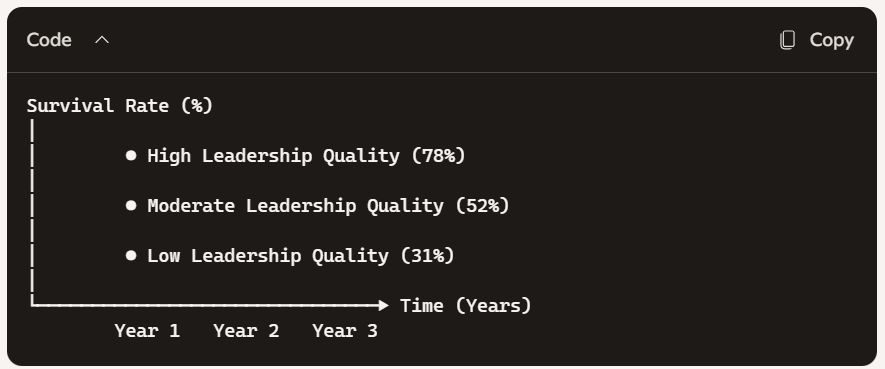
Source: Startup Genome Report 2024
Leadership Styles That Thrive in Startup Culture
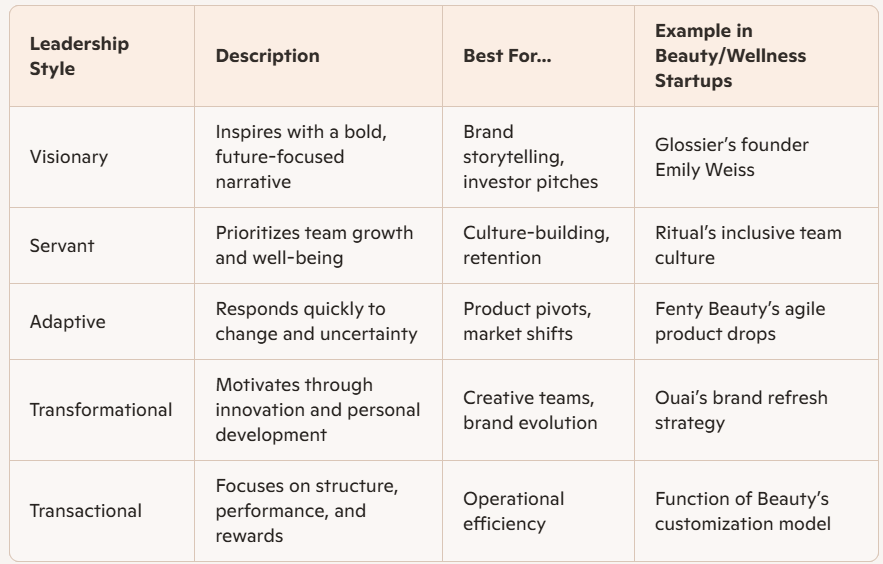
In startup environments, where speed, uncertainty, and innovation are the norm, certain leadership styles consistently outperform others. Visionary leadership, for example, thrives by anchoring teams to a bold, future-focused narrative. These leaders articulate a clear mission, whether it’s redefining clean beauty or personalizing wellness—and inspire teams to rally around it. Their strength lies in storytelling and long-term thinking, which is especially powerful in emotionally driven industries where brand identity is everything. Transformational leaders also shine in startups. They motivate through innovation and personal growth, encouraging teams to challenge norms, experiment freely, and evolve alongside the brand. This style fosters a culture of creativity and ownership, which is essential when launching new campaigns or navigating brand transitions.
Equally important are adaptive and servant leadership styles. Adaptive leaders excel in fast-changing markets; they’re quick to pivot, open to feedback, and comfortable with ambiguity. In startups, where product-market fit is often fluid and feedback loops are tight, this flexibility can be the difference between stagnation and breakthrough. Servant leaders, on the other hand, prioritize team well-being and development. They build trust, nurture collaboration, and create psychologically safe environments where ideas flourish. This is especially valuable in creative sectors, where emotional labor and personal expression are deeply tied to performance. Together, these styles don’t just manage; they mobilize, energize, and sustain startup teams through the highs and lows of early growth.
Common Leadership Challenges & Strategic Solutions
Startup leaders often find themselves juggling multiple roles while navigating unpredictable terrain. One of the most common challenges is managing team burnout, especially when small teams are expected to deliver big results under tight deadlines. Without clear boundaries or recognition systems, motivation can wane and creativity can suffer. Another frequent hurdle is delayed feedback, whether from clients, collaborators, or internal stakeholders, which can stall progress and disrupt timelines. Leaders must also contend with logistical bottlenecks, like securing campaign assets or permissions, which can derail launches if not handled proactively. And when it comes to financial operations, chasing overdue payments while preserving client relationships requires a delicate balance of assertiveness and diplomacy.
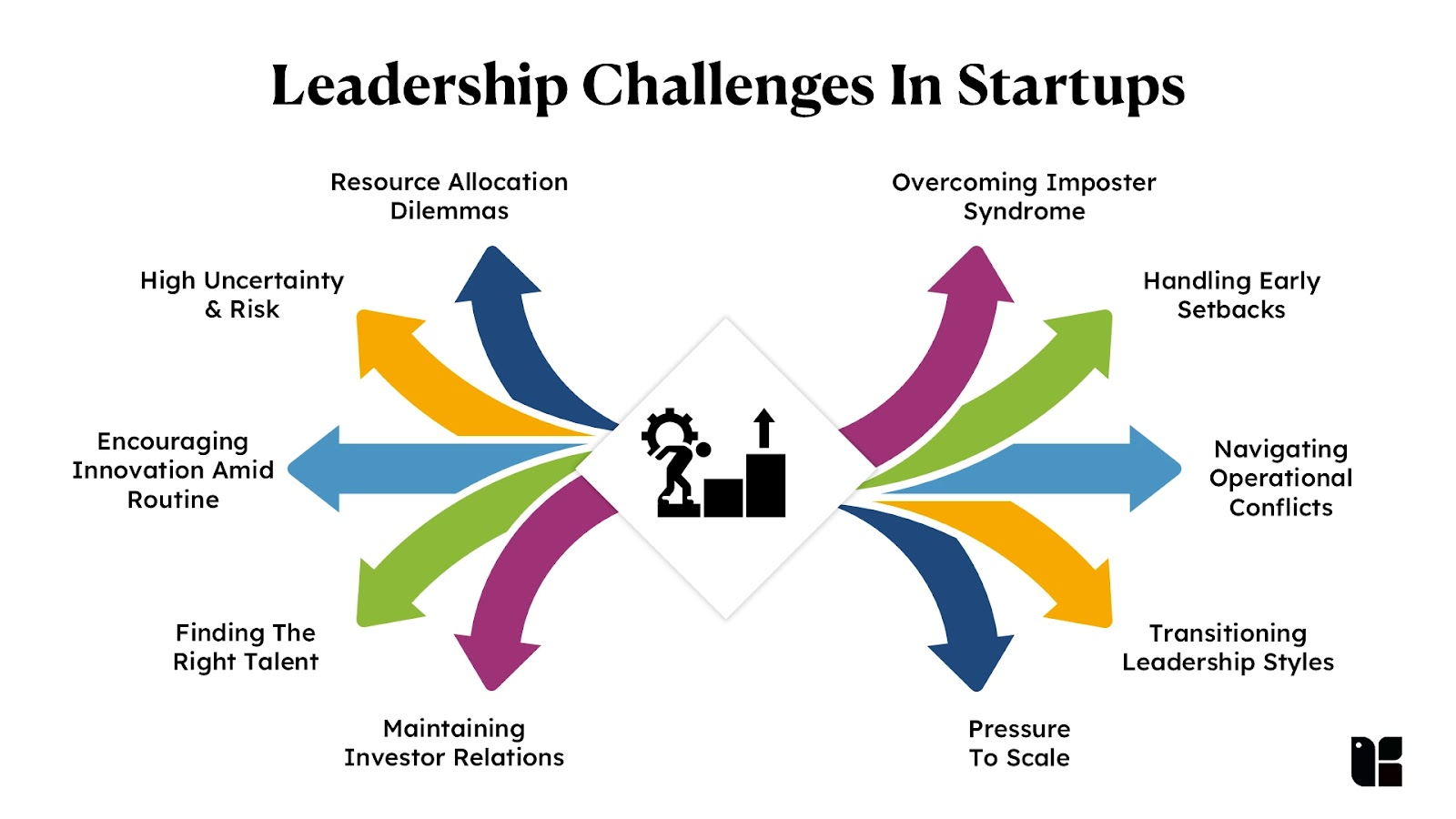
Source: kapable
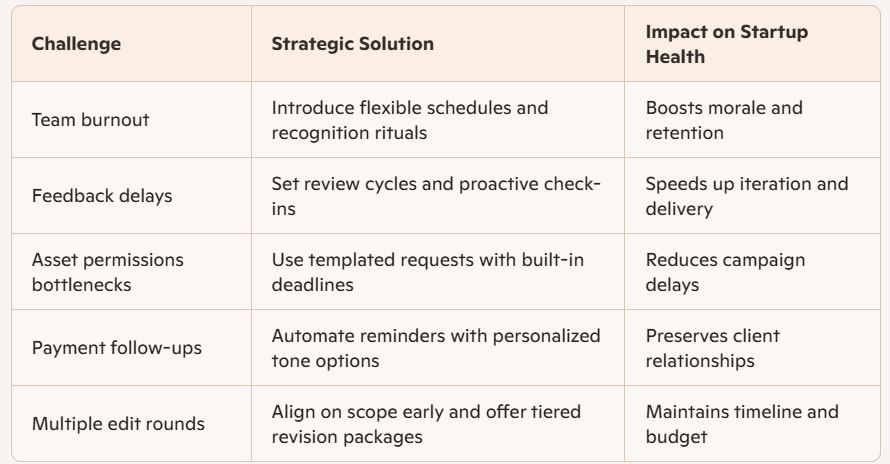
To overcome these challenges, strategic solutions must be both practical and people-centered. Implementing flexible work models and celebrating small wins can help prevent burnout and boost morale. Setting structured review cycles and using proactive check-ins ensures feedback flows consistently, keeping projects on track. For asset and permission delays, templated requests with built-in deadlines can streamline communication and reduce friction. Payment follow-ups benefit from automation paired with personalized messaging, maintaining professionalism while reinforcing accountability. And when facing multiple rounds of edits, leaders can align early on scope and offer tiered revision options to protect timelines and budgets. These solutions don’t just solve problems; they reinforce a leadership style rooted in clarity, empathy, and operational foresight.
Traits of Successful Startup Leaders
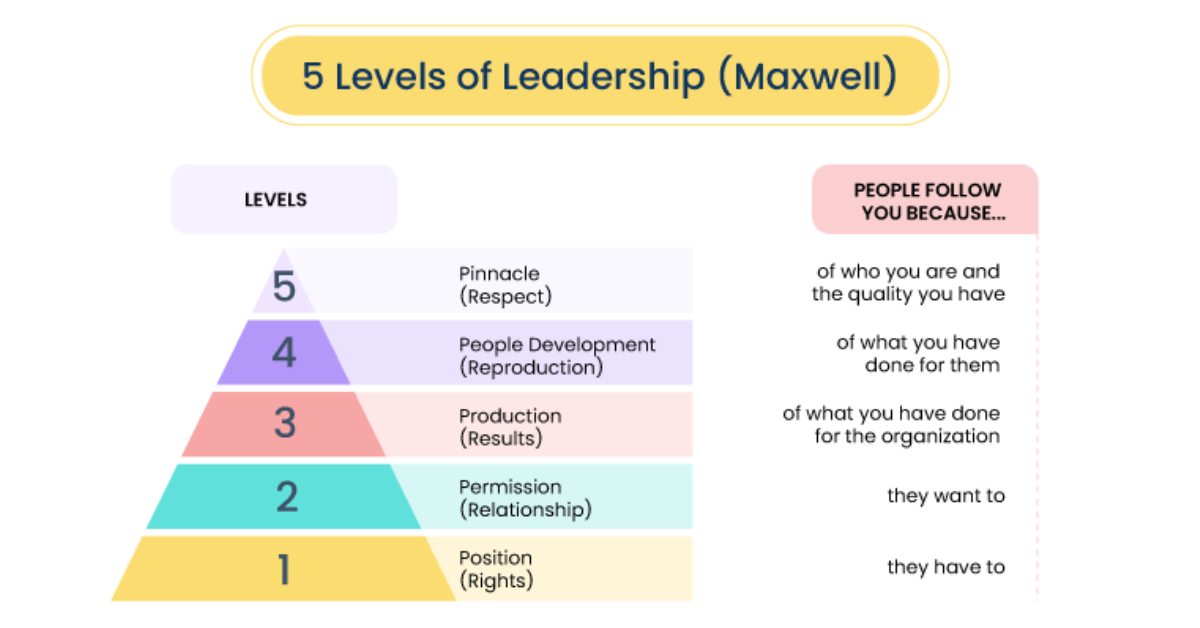
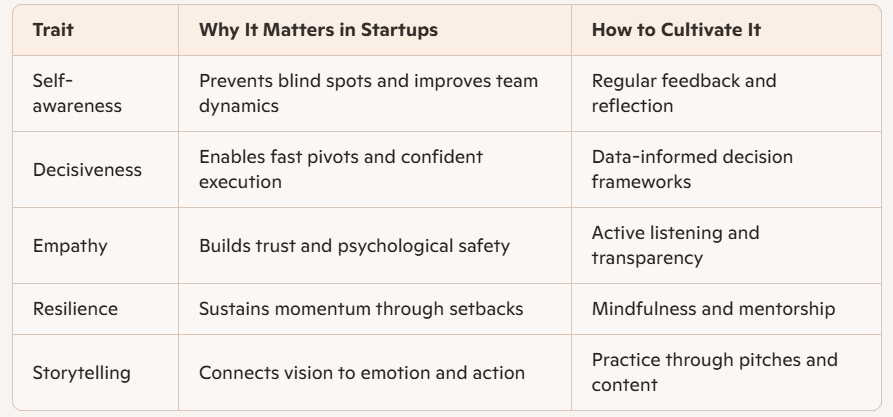
Successful startup leaders share a distinct set of traits that go beyond technical expertise or industry knowledge; they embody a mindset built for momentum, resilience, and human connection. One of the most critical traits is clarity: the ability to communicate a compelling vision and distill complex ideas into actionable direction. In fast-moving sectors like beauty and wellness, where brand identity and emotional resonance are key, clarity helps teams stay aligned and customers stay engaged. Equally important is empathy, not just as a soft skill, but as a strategic asset. Empathetic leaders understand the emotional dynamics of their teams, anticipate client needs, and build cultures rooted in trust and psychological safety. This is especially vital in creative environments, where personal expression and collaboration fuel innovation.
Source: Renew Capital
Another defining trait is adaptability. Startup leaders must be comfortable with ambiguity and quick to pivot when market feedback, client demands, or internal challenges shift the landscape. They embrace experimentation, learn from failure, and adjust without losing momentum. Decisiveness also plays a key role; leaders must make timely, informed choices even when data is incomplete or pressure is high. And finally, resilience is what sustains them through setbacks, delays, and the inevitable friction of growth. These traits don’t just shape how leaders show up; they shape how their teams perform, how their brands evolve, and how their startups survive and scale in competitive markets.
In startups, leadership isn’t a fixed trait or a checklist of competencies; it’s a living, evolving practice that demands continuous recalibration. Unlike traditional corporate environments where roles and processes are well-defined, startups operate in fluid ecosystems where change is constant and ambiguity is the norm. Here, leadership must be responsive, emotionally intelligent, and deeply attuned to both internal dynamics and external market signals.
Whether you're launching a skincare line rooted in clean beauty or scaling a wellness app that promotes holistic health, your leadership approach becomes the compass that guides every decision, interaction, and brand expression. Clarity ensures that your team understands the mission and their role in it. Empathy fosters trust, psychological safety, and a sense of belonging, especially critical in creative industries where emotional labor and personal identity often intersect with professional output. Adaptability allows you to pivot gracefully when market conditions shift, when feedback challenges your assumptions, or when growth demands new systems and mindsets.
Strong leadership in this context isn’t about control; it’s about magnetism. It’s the ability to attract top talent not just with compensation, but with purpose. It’s the capacity to navigate uncertainty without losing momentum or morale. And most importantly, it’s about cultivating a culture where experimentation is encouraged, feedback is valued, and every team member feels empowered to contribute meaningfully. In essence, startup leadership is the invisible architecture that holds the brand together as it grows, evolves, and defines its place in the world.